Home / Clinic and Daycare Floors That Clean Easily in Allen
Clinic and Daycare Floors That Clean Easily in Allen
The cleaning problem behind every clinic and daycare floor
A pediatric office near Allen Event Center and a daycare room in a quiet Collin County neighborhood have something in common that has nothing to do with the work they do. Both host small bodies and sick bodies, and both rely on staff who disinfect the floor again and again. Spilled juice, tracked-in mud from the playground, vomit, diaper-change accidents, and the damp footprints of a rainy morning all end up on the same surface. A floor that can be wiped clean in a minute is not a luxury in these buildings. It is the difference between a routine day and an infection scare.
Seamless resinous floors are popular in these settings for a simple reason. Tile has grout lines, sheet vinyl has welded seams that can lift, and carpet holds moisture and allergens. A continuous epoxy or urethane surface has no joints to harbor anything, and the coating can be carried up the wall so the corner is rounded and easy to reach.
What seamless really means in practice
A seamless floor is not a floor without any lines at all. Slabs still have control joints, and a good installer plans for them. What seamless means is that the walking surface is a single bonded film across the room, with no gaps between tiles or planks where liquid can sit. The edges against the wall are sealed with a cove so there is no crack between the floor and baseboard.
This matters in a nursery room where infants crawl at floor level. A crawling baby puts hands and toys down and then in the mouth. The surface they touch should be one that gets cleaned thoroughly every day with products approved for the space. Grout lines absorb whatever lands on them, and old grout becomes a stain trap that no mop reaches. A coated floor skips that problem.
Disinfectants and the coating that has to survive them
Clinics and daycares clean with stronger products than a typical home. Bleach-based cleaners, quaternary ammonium sanitizers and hydrogen peroxide based products are all common. Some coatings tolerate these better than others. A topcoat that yellows or softens under repeated bleach exposure will look worn long before its time. The product data sheet should state chemical resistance for the exact products the facility uses, and a spot test on a sample board is cheap peace of mind.
Dwell time is also a factor. Disinfectants work by staying wet on the surface for a set contact period. A smooth, nonporous floor lets the product stay in contact with the full area. A porous or cracked surface can pull the liquid in, leaving the true surface drier than it appears.
Texture, traction and little feet
Children run, slip and fall. A daycare floor that is smooth and glossy can be dangerous when damp, while one that is too rough scrapes knees and is hard to mop. The goal is a light, even texture that grips shoe soles and bare feet without being abrasive. In play areas, a softer or cushioned surface might be installed over the coating, but the coated concrete under a play mat still needs to be easy to clean.
Clinics have a different traction concern. Patients arrive with canes, walkers and crutches, and some are unsteady. A calm, low-glare finish keeps a patient from misjudging the surface, and the entry should have a mat that catches water. Exam rooms often get a medium sheen, since a mirror gloss shows every fingerprint and scuff from a rolling stool.
Color, light and the mood of a room
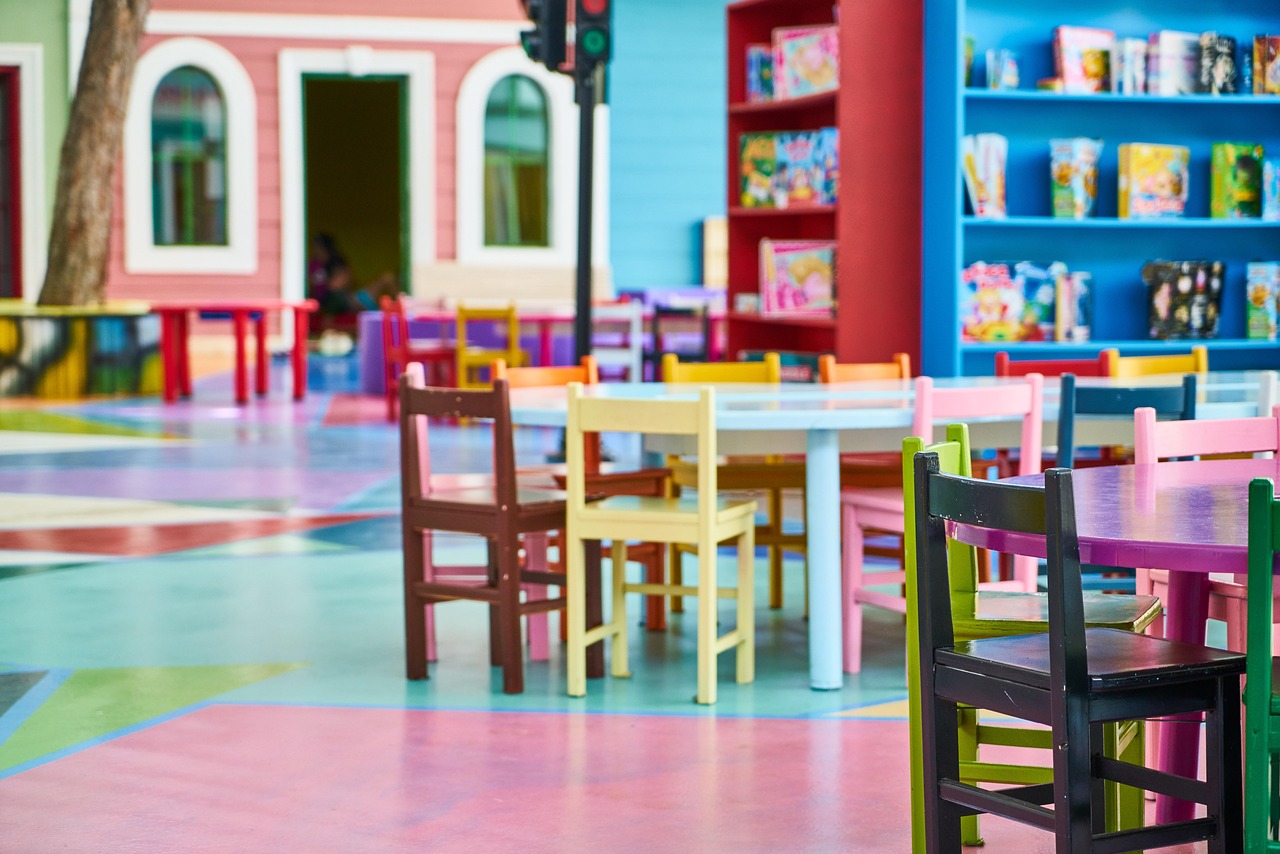
Color affects how a space feels. Light neutrals keep a clinic looking clean and open, while a soft green or blue can calm a waiting room. Daycares often want a cheerful palette, but loud, saturated colors across an entire floor tire the eyes. A better approach is a quiet base color with accents, such as a bordered play zone or a painted line that guides children to the sink area. Flake systems in a soft blend hide dirt and show less wear than a plain field.
Practical safety plays a part too. A floor that is too similar in tone to the walls can make a room feel flat, and a stark contrast at the base helps visually impaired visitors find the room's edges. Clear markings at stairs, ramps and doorways avoid trips.
Odor and fumes in an occupied building
Few clinics or daycares can shut down for long, and these are the last places where anyone wants a lingering chemical smell. Low-odor, low-emission resin systems exist and are the usual choice for these buildings. Installers also schedule work for weekends or after-hours shifts, run fans toward the outside and keep the work area isolated from the rest of the building until the floor is cured.
Children and medical patients are more sensitive to indoor air than healthy adults, so air quality after the job deserves attention. A well-planned project airs out the space and does not reopen it until the odor is gone, not simply until the surface is dry to the touch.
Preparing older Allen buildings for a coating
A lot of Allen's commercial space went up in the 1990s through the 2010s, and many clinics and childcare centers occupy converted storefronts or lease suites. The slabs may carry old carpet glue, scars from removed walls, or hairline cracks from North Texas clay movement. All of that has to be addressed before coating. Grinding opens the slab and removes contaminants. Moisture testing tells you whether vapor could push up under the film, and a moisture-tolerant primer handles marginal readings.
Plumbing is another concern. Floor drains in restrooms and mop sink areas should be sealed neatly into the coating, with the floor sloping toward the drain. Any penetration through the slab, such as a pipe sleeve, deserves a bead of flexible sealant so water cannot creep underneath.
Scheduling and communication with staff
Parents and patients like to know what is happening. A clear notice about closed rooms, safe entrances and the reopening date prevents confusion. Staff should learn the care routine for the new floor: which cleaners to use, how long to wait before moving furniture back and how to handle a chemical spill. Written instructions posted near the janitor closet are better than a verbal handoff.
Furniture and equipment need attention too. Heavy cribs, exam tables and storage shelves should have felt or rubber pads under their feet. Dragging a sharp metal leg across a freshly cured floor can leave a scratch, which becomes a place where dirt collects.
Everyday care that protects the surface
- Sweep or dust mop first, so grit does not scratch the topcoat during wet cleaning.
- Use a manufacturer-approved disinfectant at the correct dilution, not a stronger mix.
- Rinse where a product leaves residue, since film makes a floor slippery.
- Place mats at exterior doors and under sinks to catch water before it spreads.
- Check the cove and drain edges monthly and report any chip or lifted corner.
In a clinic or daycare, the floor is part of the cleaning system. A seamless coating, chosen for the chemicals the staff actually uses and installed over a properly prepared slab, makes the daily routine faster and the building safer for the people inside it.